Sunday, March 8, 2015

Could the fever from Dengue fever cure some cancers?

A long article on the BBC about "spontaneous" remission of various cancer tumors.

The technique, developed by American start-up PrimeVax, involves a two-pronged approach. It would begin by taking a sample of the tumour, and collecting dendritic cells from the patient’s blood. These cells help coordinate the immune system’s response to a threat, and by exposing them to the tumour in the lab, it is possible to programme them to recognise the cancerous cells. Meanwhile, the patient is given a dose of dengue fever, a disease normally carried by mosquitoes, before they are injected with the newly trained dendritic cells.
Under the supervision of doctors in a hospital, the patient would begin to develop a 40.5C fever, combined with the widespread release of inflammatory molecules – putting the rest of the immune system on red alert. Where the tumour was once able to lurk under the radar, it should now become a prime target for an intense attack from the immune cells, led by the programmed dendritic cells. “Dengue fever crashes and regroups the immune system, so that it is reset to kill tumour cells,” says Bruce Lyday at PrimeVax.
this double approach (but not with dengue) was used against Joy's sister's cancer, and no it did not work.

so don't get your hopes up...

However, malaria was once used to destroy syphillis of the brain which was fatal in the bad old days before Salvarsan and Penicillin.

Tuesday, March 3, 2015

GIGO Studies

GIGO: Garbage in, garbage out.

So moms who took antibiotics during pregnancy have kids with a higher rate of "asthma" and allergies?

uh, maybe it was because mom had low grade "asthma" and usually needs or wants antibiotics when she got bronchitis?

Or did they include the moms who took antibiotics for UTIs?

without reading the study, who knows.

And the side bar contains similar GIGO articles.


Related Stories


In "asthma", there are two reasons it is more commonly diagnosed: one, the threshhold is lower (in the past, unless one wheezed all the time you didn't get diagnosed with "asthma". Now if you get a little bronchospams when running etc. you are diagnosed as such), two, air pollution.


David Warren writes a scathing essay on these studies, that justify the nanny state, and of course, more funding for more "research"...

According to the latest research, he writes facetiously, coffee may be good for your heart. It just might prevent cholesterol build-up in the arteries and … blah blah blah. I refer to some Korean study in the news this morning, but the findings (not of causation but of statistical correlation) are hardly new. There was for instance a big Dutch study five years ago, which redeemed tea as well as coffee, and I vaguely remember others. “More research is needed,” say all the people who make money from such pointless research. We are trained to nod sleepily in agreement. These hugely expensive, perpetually inconclusive, and very soft epidemiological studies are what most people have in mind when the magic word, “science,” is invoked: for we are living in an age of magic.Actual science would show the mechanism by which a specific constituent in coffee, such as caffeine, operates within the human metabolism to produce specific reactions in a long, very specific chain, leading to a specific result. 
and he notes that they are aiming at other people's sins, the innocent pleasures of ordinary people, not the traditional sins of promiscuity, seducing children, aborting offspring etc. But I'll probably quote that part on my boinkieblog.


---------------------------

related item: divorce fuels kid's sugary intake.

"When families separate, one of the things that is most impacted for kids is their day-to-day routines," said Jeff Cookston, professor and chair of psychology at SF State and lead researcher on the study. "Children are looking for consistency in their family environment, and family routines provide that security and continuity."
The study is the first to examine the real-time eating habits of divorced and married families, rather than rely on family members' recollections of past meals or behavior. Cookston and his colleagues interviewed the participants -- parents and children in both married and divorced families -- and asked them to keep five-day diaries of their eating habits. When they looked at the data, they found that children whose parents were separated or recently divorced were much more likely to drink sugar-sweetened beverages than children whose parents are married. Divorce did not appear to have a major impact on other unhealthful behaviors such as skipping breakfast or eating dinner outside the home.
The reason, Cookston says, is likely ease and access. Divorce can put a great deal of stress on families, including children, and drinking sugary beverages can be a "quick fix" for dealing with that stress.
why, yes.

And as StrategyPage notes: Ways that soldiers cope with stress are sugary drinks and junk food, cigarette smoking, and video games...

The troops know that the drugs they take have bad side effects, but combat is inherently dangerous, and staying awake and stress free is the easiest way to avoid all the other dangers. In addition to these immediate problems there is the longer term impact of stress and tobacco has always been good at that. So when pilots land they go looking for a drink and a cigarette. Same with sailors, who are still allowed to smoke in specified areas and these smoking stations are always busy when the crew is under a lot of stress. Thus for all its long term problems, tobacco is still one of the best short term anti-stress solution. The other one is candy, but that has more immediate shortcomings as well as long-term dangers that explains all the efforts to cure bad eating habits. Then there are violent video games, which unexpectedly turned out to be an excellent combat stress reliever as well as useful in dealing with long-term (PTSD) combat stress problems. It’s still unclear what the long-term downside is for these games. The problem with video games is that they are not as convenient as tobacco. In any event the search continues for more effective combat stress relievers.

and I would add: Alcohol and sex.

this last part is a problem in Muslim lands, since honor killing might be the fate of the friendly girls. But there are some lovely ladies among the military who help...alas, some men mistake the lovely and willing with the non willing, so rape is a major but little talked about problem...and now, with Obama pushing gay/transvestites in the military, expect more unreported problems.

Am I being cynical? Well, we can't keep young male employees here since they get sexually harassed by a family member who will remain nameless. Half just quit, and the other half go along for the money until the wifey finds out and fires them...and this doesn't include the guy at the farm party who passed out and ended up raped. Luckily he was greedy, but our cook got upset because she was no longer getting any love from her boy toy.

Ah life in the Philippines....

_________________
related item: How beer made civilization.


Monday, March 2, 2015

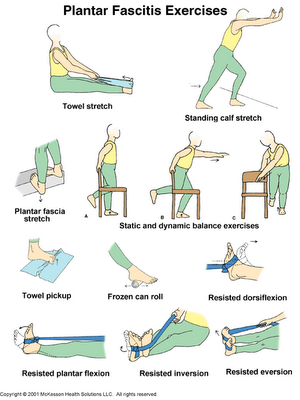
will ultrasound treatment help heel pain?

one common problem is pain on the heel, aka plantar fasciitis, where the plantar fascia (that's the broadcloth like support that holds up your arch and tendons) inserts to the heel bone.

photo source http://orthoinfo.aaos.org/topic.cfm?topic=a00149


Usually you treat it with NSAIDS (eg advil/alleve/aspirin) and stretching, also shoe inserts to keep the arch from falling. Some people say to use splints, but I could never get people to actually keep using them.

photolink here.

Now they suggest ultrasound might help those with this nasty painful but not serious cause of heel pain.

I used to give a lot of cortisone shots for this (on "the res" where I worked, to get ultrasound treatment took making a request via the tribal health board, since we didn't have the machine...and since this treatment was not urgent, often it didn't get funded).

usually I warned the patient that the shot was very painful: enough to make strong men cry.

And they agreed with me.

But usually it did help the pain


Tuesday, February 24, 2015

reversing the abortion pill

LINK

apparently a shot of progesterone will save the pregnancy if the mom changes her mind.

Indeed, some women change their mind. Well, duh. that is why population freaks don't want a waiting period. They claim it discriminates against poor women, but what they mean is too many poor women are panicked or coerced and change their minds.

Friday, January 23, 2015

Mrs Wilde diagnosed? Nah.

TeaAtTrianon links to a UK Guardian article on Mrs Oscar Wilde, saying that some South African doc has written an article saying she had Multiple Sclerosis not neurosyphilis of the spine.
color me skeptical.

Syphilis was called "the Great imitator" and few modern docs have seen tertiary syphilis. Ironically, one of the doctors penning the original article being reviewed is a South African. Now, one does see tertiary syphilis there, mainly because their social policies separated the men in mines and factories from their wives. Yet one does not see MS in black Africans. I believe the rate in white Africans is the same as in Europeans, but I'd have to look that up to be sure. So why does this doc have expertise in both diseases, since the populations are different and the diseases are treated by different subspecialists? (One, infectious disease specialist the other Neurologists).

Neurosyphilis was common back then, including spinal versions where only the spine was affected...and neuropathic pain and paralysis from heavy metal poisoning from medicines used to treat these diseases was also a problem. (some doctors think Isaak Dineson's leg pains and paralysis was from her treatment, not her syphilis, for example)...

Since the saying in medicine is "When you hear hoofbeats, think horses, not zebras", let me doubt the MS diagnosis, although I don't have access to all the symptoms, headache is not a symptom of MS, and I didn't see any reference to blindness or arm symptoms, which is seen in that disease. But without access to the original article, I can't be sure.

See the book Shakespeare's tremor and Orwell's cough.

which discusses the mercury neurotoxicity from treating "the great pox".

Modern docs tend to shy away from these things, yet one wonders how much of the eccentricities of folks like Henry VIII or Ivan the terrible were heavy metal problems.

And of course, the deterioration of Nietze, whose writings resemble one in a manic phase of bipolar disease, were probably from the manic phase of neurosyphillis, which slowly deteriorated into dementia and paralysis.

Ironic, isn't it, that the philosophy of the modern world and the philosophy of the Nazis might be from a diseased mind?

Lots of denial here: I've even  read that his Nazi sister "edited" the writings to support Hitler's ideas. Well, maybe she did, but she wasn't that talented, so the ideas were still his. She seemed to be narcissitic, not demented...

And the modern physicians often get headlines by pointing to exotic rare diseases as the cause of something. For example, the black plague, diagnosed as "ebola", or the plague of Athens, which turned out to probably be typhoid, being something else. Disease in the past often didn't look like it does now, which also confuses matters.

The evolution of syphilis to a more "benign" disease for example is well known.

Of course, rare diseases do occur: Polio is almost eradicated, but with the Mullahs reading the UKGuardian and other papers insisting polio vaccine causes ____ (fill in blanks with favorite problem) we now see almost as many cases of mutated Oral polio virus (in a tiny percentage of those given OPV, the weakened virus mutates back to full strength, and can infect those in contact with the child. Given the large populations of unvaccinated kids, this has caused outbreaks of polio in Africa and Pakistan). And now, in the US, a variation is found in another enterovirus causing paralysis in rare cases.

That hasn't gotten publicity of course except on right wing blogs, since there is some suspicion that it came up from Central America with the children illegal immigrants who obeyed Obama's policy to come quickly and get in free before President Cruz gets elected.

one more thing: One quack decided it was her gynecology problem causing the problem, and Mrs. W died of surgery. Well, that implies she had adhesions and chronic pelvic pain from PID (Untreated gonorrhea). That disease, however, doesn't cause paralysis, but points to the fact she might also have had syphilis.

Or maybe he decided her problems were psychological, and could be cured by hysterectomy. Given my problems with ovarian cysts and "raging hormones" there is a little truth in that statement, but a lot of this was Freud's influence too.

Indeed, Freud got into trouble when some quack influenced him to think that nasal problems were sexual and almost killed one of Freud's patients in a surgical procedure.

Freud is still seen as a pioneer scientist, but the truth is that most of his theories are philosophical, not scientific, and few psychiatrists do psychotherapy anymore, since drugs work faster and more efficiently for such things.


Tuesday, December 23, 2014

politicizing the blood supply (X rated)

The decision to "allow" gay and "bisexuals" to donate blood was a purely political decision.

True, they might be HIV positive, but the testing will find that out. And the one year prohibition should catch the danger of spreading HIV before the screening test turned positive.

The problem? People lie....

But it's not the sexual orientation that is the problem: It's the anal sex.

This survey of people in "high risk" areas for HIV of "heterosexuals" suggest that anal sex is a major problem in the spread of HIV: And 30 percent of both men and women admit to anal sex...

but the main danger is drug use: 50 percent admit to using drugs (not necessarily IV, mostly oral).

and I found this interesting:

blacks or African Americans (hereafter referred to as blacks) and Hispanics/Latinos are disproportionately affected by HIV. Estimated rates of diagnosed HIV infection in 2011 were 9 times as high for blacks and 3 times as high for Hispanics or Latinos compared with the rate for whites.

in Latin cultures, sodomy is a way of humiliating women.

But the "high risk" areas apparently included a lot more African Americans than other groups.

Participant Characteristics

Approximately half (58%) of participants were aged 40–60 years. The majority of participants reported black race (72%) or Hispanic/Latino ethnicity (21%); the sample was evenly distributed by sex (Table 1). The majority of participants (64%) had never married and were not cohabiting. Most participants reported no more than a high school education (men: 86%; women: 83%) and very low incomes. For instance, most participants (87%) reported annual incomes of <$20,000, which is lower than the federal poverty guidelines for a family of four; approximately one in three (36%) reported annual incomes of <$5,000. Nearly three out of four (men: 72%; women: 73%) reported both income at or below poverty and no more than a high school education (data not shown). Approximately one third (31%) of participants were currently or had been homeless in the 12 months before the interview, and nearly half (46%) were uninsured.
With the exception of homelessness and health insurance, the demographic characteristics were similar for male and female participants. Approximately one third of male (35%) and female (27%) participants had been homeless at some time in the 12 months before the interview.  

and they tried to exclude high risk behaviors, but found some participants had done these things more than 12 months earlier

Although the analysis sample excluded data from participants who reported they had recently (within 12 months of interview) injected drugs or had male-male sex, 14% of male participants reported that they had injected drugs or had sex with another man >12 months before the interview; 5% of female participants had injected drugs >12 months before the interview (data not shown). Each participating area contributed an average of 442 interviews (range: 131–565) to this analysis. 

the number of average sexual partners was low: 3 for men, 2 for women.
And then you come to this:


A total of 4,467 (90%) female participants reported having vaginal sex without a condom with a male partner in the 12 months before the interview, and 1,420 (29%) reported having anal sex without a condom with a male partner (Table 3). The percentages of women who had vaginal sex without a condom were similar among women in all categories of education and income. Anal sex without a condom was more common among those with lower levels of income. 

anal sex requires a stronger better lubricated condom than vaginal intercourse.

and unprotected vaginal and  anal sex was more common when it was with a casual contact, and by white men.

 Vaginal or anal sex and vaginal or anal sex without a condom with female casual partners were less common among male participants who were married or cohabiting and among those with higher incomes and were more common among white men. 

another variable was lack of health insurance.

yet 70 plus percent had been tested for HIV, about 30 percent within the past year and most in community clinics or health centers.

much of the rest of the survey is about routine (one third got free condoms) (remember that some people overreport good behavior and underreport bad behavior).

the reason I bring up anal sex is that the passive partner is more likely to catch HIV, and in Africa, non vaginal intercourse was used during lactation to prevent pregnancy in some tribes (although in south Africa, intercrural intercourse was traditional to keep the girls virgins).


a broader cdc population survey suggested that 35 percent of women admit to having anal intercourse, and the average number of sexual partners lifetime was 4 for women and 6 for men. No link: A pdf that crashed my browser.

this estimate of anal sex is a lot higher than that found by Kinsey's survey, which was mainly in teens.

No, I'm not an expert on anal sex, mainly because it was not that common among the groups I worked with.

But one wonders why there is no outreach to people about this risky form of intercourse.

Finally, this caught my eye:

 Use of crack cocaine has been associated with HIV infection among heterosexuals in the United States (7,10,42). These results highlight opportunities for drug use prevention efforts among low-income urban populations. 

I've read anecdotes about homeless women trading sex for crack cocaine, and wonder how many traded anal sex for this (note the lower rate of anal sex with regular partner suggests it might be more common in those trading sex for money etc.).

So what does this have to do with the blood supply?

Well, if you don't want to offend the "gay" activists, just continue asking about anal sex for everyone. And ask about the past year.

But remember, the type who do such things often lie about it.

Sunday, December 21, 2014

Ebola update

Sheryl Atkinson at Fox news says that new cases of Ebola are no longer being reported in the news, or on the CDC news for political reasons.

The CDC has put out (finally) videos how to put out suits and protective gear, but no recent news of cases except in local papers.

So how many possible cases are there? 1400 are being monitored they told her.

MMWR homepage here. The Ebola page has mainly reports in Africa for the last two months.

so this should be in the monthly report of reportable diseases, yet their link gives a 2012 report. Huh?


my rss feed gives me the latest here.

but you have to find it in the footnotes:

There were no cases of viral hemorrhagic fever reported during the current week. In addition to the 4 cases of Ebola diagnosed in the United States to date in 2014, six residents of the
US have been medically evacuated to the US for care after developing Ebola in West Africa. Ten of the 11 VHF cases reported for 2014 are confirmed as Ebola and one as Lassa Fever. See Table II for dengue hemorrhagic fever.
So most cases being monitored haven't developed the disease, yet.