Sunday, February 19, 2017

soft drink update

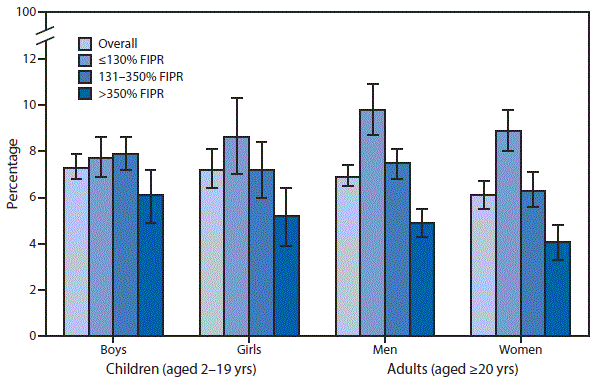
CDC reports that only 7 percent of calories come from sugary drinks.


----------
there is also a nonsense article floating around that eating meat or a tiny amount of butter or palm oil leads to diabetes/insulin resistance.

Yes but poor countries who don't eat meat don't have diabetes, and their vegetarianism leads to malnutrition and you die of minor infections.

Saturday, February 18, 2017

The WAGD disease of the Day: Bill Gates is worried.


ll Gates hyperventillates and worries an epidemic might kill 30 million people. He cites Ebola as an example.

well, duh. Simple influenza kills half a million each year, (and the Spanish Flu in 1918 probably killed 30 million people),  but there are other ordinary germs that kill a lot of people but don't get a lot of publicity.

From Live Science: dangerous viruses that kill a lot of people include HIV, Rabies, Influenza, Dengue Fever, and Rotavirus (which causes diarrhea),


I would put Measles into that statistic, but thanks to vaccines, (and partly thanks to Bill Gate's money to fund the vaccine) the number of measles deaths has dropped 70+%, and now only killed 134 thousand people in 2015.

CDC has statistics on diseases prevented by vaccines, 1900 to 1990...


For example, in 1900, 21,064 smallpox cases were reported, and 894 patients died (1). In 1920, 469,924 measles cases were reported, and 7575 patients died; 147,991 diphtheria cases were reported, and 13,170 patients died. In 1922, 107,473 pertussis cases were reported, and 5099 patients died (2,3).


TABLE 2. Baseline 20th century annual morbidity and 1998 provisional morbidity from
nine diseases with vaccines recommended before 1990 for universal use in children
-- United States
===============================================================================================
                             Baseline 20th century     1998 Provisional       %
Disease                        annual morbidity           morbidity       Decrease
--------------------------------------------------------------------------------------
Smallpox                            48,164*                    0            100%
Diphtheria                         175,885+                    1            100%&
Pertussis                          147,271                6,279           95.7%
Tetanus                              1,314                  34             97.4%
Poliomyelitis (paralytic)           16,316                 0              100%
Measles                            503,282                89              100%&
Mumps                              152,209                606             99.6%
Rubella                             47,745               345             99.3%
 Congenital rubella                    823                 5             99.4%
  syndrome
Haemophilus                         20,000                54****         99.7%
 influenzae  type b
--------------------------------------------------------------------------------------

but of course the Hollywood anti vaxer type prefer fake news to actual numbers.

some of theses diseases I have seen, either in the US (I graduated before MMR vaccine existed) or overseas; others like diphtheria and small pox, our older collegues had seen them and told us stories. I remember one telling us that the Infectious disease hospital in our city had a bell, to alert doctors that a diphtheria patient had arrrived and needed an emergency tracheostomy to keep him from choking to death.

and not that about congenital rubella? worse than Zika...

Related item: A huge epidemic killed off most of native Mexicans years after the Spanish conquest. i.e. conquest was 1520, so the smallpox etc they brought would have killed then. But there was a larger epidemic of unknown cause from 1545 to 1550.

There are articles written about it's strange epidemiology, and some historians note that previous epidemics had occurred before the Spanish arrived.

The rise and fall of civilizations in the Americas occurred on and off in the 2000 years before Colombus arrived; how much of this was from climate change and how much from disease, or from both is unclear, since these things are related.


some demographic surveys suggest there were a lot of health problems and malnutrition in the area before the Spanish came. They also analyze the demographic collapse numbers that are published.

ah but did the Europeans bring the "pest" that essentially depopulated Mexico in the 1500's?

well, Archeology Magazine now says some scientists say the 1545 epidemic might have been a varient Salmonella, and yes probably came over from Europe.


The scientists sequenced bacterial DNA obtained from the teeth of 29 people who had been buried in southern Mexico, and compared the samples to a database of more than 2,700 modern bacterial genomes. The DNA recovered from several of the individuals matched that of Salmonella. Further testing suggests the strain is a rare one that today causes enteric fever and can be fatal without treatment. Evidence for the presence of the same strain of bacteria has been found in a woman who was buried in Trondheim, Norway, around the year A.D. 1200. The study suggests that the bacteria may have been carried by Spanish explorers to the New World. To read in-depth about the study of ancient DNA, go to “Worlds Within Us.”
Salmonella strains include dysentary (bloody diarrhea) but also typhoid fever; it is spread via water contaminated by feces, and direct contact.

there were several epidemics that caused the population collapse: NIH article here.  suspected rat bourne illnesses, e.g. Hanta virus etc.

like the recent hantavirus outbreak among the Navajo, drought and rodent infestation could have been behind  the 1545 and 1576 epidemics.

 In 1545 the epidemic affected the northern and central high valleys of Mexico and ended in Chiapas and Guatemala . In both the 1545 and 1576 epidemics, the infections were largely absent from the warm, low-lying coastal plains on the Gulf of Mexico and Pacific coasts . This geography of disease is not consistent with the introduction of an Old World virus to Mexico, which should have effected both coastal and highland populations.

but if it was due to salmonella (i.e. water borne or contact spread), drought could also explain this, especially if feces contaminated the water supply.

So the really really scary part of all of this is this chart:

Acuna-Soto R1, Stahle DW, Cleaveland MK, Therrell MD. - Emerging Infectious Diseases, April 2002; vol 8 (number 4), pages 360-2


on the other hand:
I'll repost the first  chart  that puts the population fluctuations into perspective. BP means before present:


 The graph shows the population of the Valley of Mexico expanding from fewer than 5,000 inhabitants 3,500 years ago to some 1-1.2 million in 1519. Three long cycles of growth stand out—3500-2100 BP, 1850-1250 BP, and 850-500 BP—, punctuated by two periods of decay—2100-1850 BP and 1250-850 BP. Region-wide decline is explained sometimes by exogenous factors—a cooling climate or severe seismic activity—and at others by endogenous developments or lack thereof, such as population pressure, economic decay, or political disintegration.
if this was indeed Salmonella, then one would have to figure out if the drought and water supply was to blame for it's spread... one of the articles discusses this.

I'll have to read up, but it does make one wonder if the next epidemic could be better stopped by clean water and isolation techniques than with fancy methods.

Indeed this  how Ebola (and SARS) was stopped: Isolating cases, and cleaning hands.

Monday, January 30, 2017

Forget Zika: The White Plague is back

The headlines in the US often are about exotic flashy but small epidemics like Zika and Ebola, not those that kill a lot more people, like Malaria or Measles.

Indeed, the traditional isolation techniques of Africa would have stopped Ebola's spread ( put the sick person in a hut, place food and water at the door, and when the hut starts smelling, burn it down.) This worked traditionally until Christian compassion made hospitals the norm.

But a potential epidemic that has been smouldering around for at least 30 years is now back in the news:

Drug resistant TB in South Africa, and is complicated by those who have HIV...

NYTIMES article reports they are finding cases, not just in those who had been treated in the past (often not completing treatment so the germs got resistant) but now it is spreading person to person.

XDR-TB has been reported in 117 countries, according to the World Health Organization. Most cases are isolated, but thousands of hidden cases are likely to exist because it takes multiple lab tests to detect each one.
The worst known outbreak is in South Africa, in the rural Zulu-dominated mountains behind Durban, where H.I.V. is also extremely common.
In 2006, researchers there reported an alarming finding: 52 out of 53 patients with both H.I.V. and XDR-TB had died, and half died within a month of getting a diagnosis.


to make things worse, few doctors in the US are able to recognize a case. Those of us who work with the AmerIndians are supposed to be aware we see "relapse" of cases, but X rays of TB scars make it hard to diagnose. I remember one case in New Mexico where I noted her scar edges seemed thicker... a bronchoscopy did reveal active TB, and the nurses were angry at me because it meant all of them had to be monitored for infection. Nowadays, PET CT scans etc. will make this easier for docs, but they are expensive in poor countries.

five to ten percent of inactive (and/or treated) TB cases will relapse: This is a problem if you were exposed as a kid and then developed Diabetes, cancer, HIV or immune problems. When I was in the IHS, we kept an eye on our diabetics, but debated whether or not to give prophylactic INH that lowers the risk but can cause liver damage.

The docs are debating how to treat it.

I suspect going back to the good old days of isolation and/or sanitariums is not a good idea. They closed most of the hospitals for this 50 years ago.

But other isolation might work... including masks, which is what we see here, not just on the street in flu season but when you go to some of the large clinics in Manila that treat TB etc. you see adults and kids walking around wearing surgical masks, to stop them from spreading infection. As in this photo of Jesus visiting the pediatric ward..
Joey Velasco


Friday, January 20, 2017

Take your pills dear

I remember years ago when the "experts" complained that pills with several ingredients inside were too rigid and too expensive, and that giving a patient the correct dosage which was nuanced for treatment was a better idea.

So instead of one blood pressure pill, you now took three. Some of them twice a day.

And people forgot.

So SciDaily says Hey, maybe fewer pills will lead to people remembering to take them.

"Fixed-dose combination pills appear to enhance adherence and persistence to anti-hypertensive medications among commercially insured patients starting treatment compared with single therapy," says Lauffenburger, in summarizing the findings. "For patients beginning anti-hypertensive treatment, clinicians may therefore want to consider starting patients on a fixed-dose combination pill rather than a single therapy."

yeah, like a lot of stuff in ivory towers, maybe they should have had a little imput by docs in the front lines.

Monday, January 16, 2017

Death by Nutella

There is a headline in the local paper about Nutella causing cancer, because it contains Palm oil.  which is really ironic, because only the rich and upper middle class can afford the spread (while the poor tend to use palm oil for cooking here because it is cheap and tasty).

So Nutella bad, palm oil used by the poor? Who cares?

Hm. The last palm oil scare was about popcorn in theatres that were cooked in palm oil. NYTiimes 2009 article from the wayback machine.

 The study, from the Center for Science in the Public Interest, looked at popcorn from three movie theater chains and detailed the contents of all portions offered.
A large tub of popcorn at Regal Cinemas, for example, holds 20 cups of popcorn and has 1,200 calories, 980 milligrams of sodium and 60 grams of saturated fat. Adding just a tablespoon of butter adds 130 calories. And do not forget that it comes with free refills.

They recommend you eat plain popcorn without any oil, which of course tastes like cardboard.

What is the problem with palm oil? it has saturated fatty acids, so was linked to heart disease.

Then they changed their mind and decided it was a health food.

Now again they are screaming: Cancer.

Yes, but only if you are a mouse who was injected with human cancer cells mixed with a certain compound that is supposed to be associated with palm oil.

To confirm the essential role of CD36 in cancer spread, they added it to non-metastatic cancer cells which then caused the cells to become metastatic.
so did they feed the mice palm oil? no. And no, CD36 is not present in palm oil

CD36 sits in the cell membrane where its job is to move fatty acids from outside of the cell into the middle.  The researchers therefore wondered how a high fat diet would impact on cancer spread, given the key role of CD36.
Interestingly, a high-fat diet, or direct stimulation of these cells with a saturated fatty acid called palmitic acid (the main component of palm oil) increased their ability to spread.
But they didn't cite where that last part, but I googled this article via Scidaily:


The researchers next looked at the role of fat intake on cancer spread. They provided mice with a high fat diet then injected them with a type of human oral cancer. The high fat diet caused 50% more mice to have larger and more frequent metastases.

so if you are a mouse who a scientist injected with human cancer don't eat nutella.

Ironically, the really important part of the research is hidden deep within the article:


Using mice with human oral cancer, the researchers were next able to show that blocking CD36 completely prevented metastasis. 

 Did I read this right?There is a drug that blocks CD36 and prevents metastases?

 LATimes article about this. 


The work of identifying those human antibodies, and of beginning to test them in humans, is expected to take up to 10 years, Benitah said. However, with a few lucky breaks, antibodies capable of knocking out CD36 in human cells could be found in just three or four years, he said.
a monoconal antibody to stop metatases. Faster, please.

It has long been known that obesity is associated with Cancer, but then you have a problem: Is it because chubby women have more estrogen, which causes breast/uterine cancer? Is it because the chronically ill are skinny? Is it genetic? Or is obesity a marker for poverty, and lead and chemical pollution is more common in poor areas (e.g.Flint Michigan)?

Is it palm oil, or is it only when you use it to fry foods, causing high temperature chemical changes? But nutella doesn't fry the oil. So why point fingers at Nutella?

maybe it's because the SJW types hate the Nutella company: lot of articles on the company websites defending their labor practices which suggest the activists have been after them.

This german paper gasps: It's sweetness is addictive!

well, duh. everything is addictive today: Anthony Weiner call your office.

So why are they after palm oil (again)? maybe because the real aim is to demonize Palm oil, to save the orangutans.
or maybe the rain forest.

Yup. Keep the environment pristine, the orangutans happy, and the local farmers dirt poor.


This article in the UKIndependent is a good debunker of all the scare stories you are reading.


What makes a good health scare?
Three essential ingredients. 
 First, there has to be something mundane that lots of ordinary people do, and preferably enjoy doing.
 Second, there has to be a nasty disease, or a frightening health condition.
Third, the word “causes” must appear.
A big scare last week concerned Nutella, with reports that the processed palm oil used in the production of the hazelnut spread might be carcinogenic. ...

 The problem with such stories is not the underlying science, but that the fact that they generally do a terrible job of conveying a clear sense of the scale of the risk to the typical reader.
The palm oil research is at too early a stage for any kind of quantitative headline about risks to health.
 they then go on to parse statistics: A huge number might only mean a slight increase in actual personal risk.

This was apparent during the 2015 bacon scare, when reports of an 18 per cent increase in the risk of contracting bowel cancer from consuming two rashers of bacon a day were widely interpreted as suggesting an almost one in five chance of getting it.
In fact, the lifetime risk for regular bacon eaters of developing bowel cancer is 7 per cent, up from 6 per cent for those who don’t eat it.

ah Bacon!

so enjoy:


cross posted from my main blog.

Saturday, January 14, 2017

knitting post of the week


When a blood vessel or your broncheal tube is blocked, you open it and put in stent to keep it open. Usually a stent is a sping or basket weave, and they are left in place. But what about if they are in places where they could cause scar tissue and should be rmoved?

Mattsson evaluated and tried several different methods, but he found the ultimate solution in a pair of old socks. Mattsson's stent is knitted, and like a sock can be unraveled after it has been used. This allows the stent to be removed when it is not needed anymore.

Fetal Alcohol syndrome


Worldwide, an estimated 119,000 children are born with fetal alcohol syndrome (FAS) each year, a new study shows. The study provides the first-ever estimates of the proportion of women who drink during pregnancy, as well as estimates of FAS by country, World Health Organization region and worldwide.


I suspect this might be an estimate of the severe full syndrome, but like a lot of things, it is a continuum, and if you include all babies with some damage it is probably ten times that much.

You can see the problem in this description:


Globally, nearly 10 per cent of women drink alcohol during pregnancy, with wide variations by country and WHO region. In some countries, more than 45 per cent of women consume alcohol during pregnancy. In Canada, which has clinical guidelines advising abstinence during pregnancy, an estimated 10 per cent of pregnant women still drink, which is close to the estimated world average.
wait a second: If you include countries who routinely drink wine (or beer) with their meals, you get a huge number of drinkers, but not a lot of FAS. Whereas in Canada, I suspect their "First Nation" doctors see a lot of it, because drinking there is hard drunkeness although not necessrily daily alcohol.

Both exaggerated (no, one drink won't affect your kid) and underestimated.is much.

more from the article:

Nearly 15 per 10,000 people around the world are estimated to have FAS, the most severe form of Fetal Alcohol Spectrum Disorder (FASD). FAS is characterized by mental, behavioural and learning problems, as well as physical disabilities. 

In Canada, the estimate is 10.5 cases of FAS per 10,000 people.
 Not every woman who drinks while pregnant will have a child with FAS. "We estimated that one in 67 mothers who drink during pregnancy will deliver a child with FAS," says lead author Dr. Svetlana Popova, Senior Scientist in CAMH's Institute for Mental Health Policy Research. 

 She notes that this figure is very conservative and does not include other types of FASD that may occur from alcohol consumption during pregnancy, including partial FAS (pFAS) and Alcohol-related Neurodevelopmental Disorders (ARND). Although it's well established that alcohol can damage any organ or system in the developing fetus, particularly the brain, it's still not known exactly what makes a fetus most susceptible, in terms of the amount or frequency of alcohol use, or timing of drinking during pregnancy. Other factors, such as the genetics, stress, smoking and nutrition also contribute to the risk of developing FASD.